
Some Things Belong Outside. People Don’t!
The Reality of Homelessness in 2026
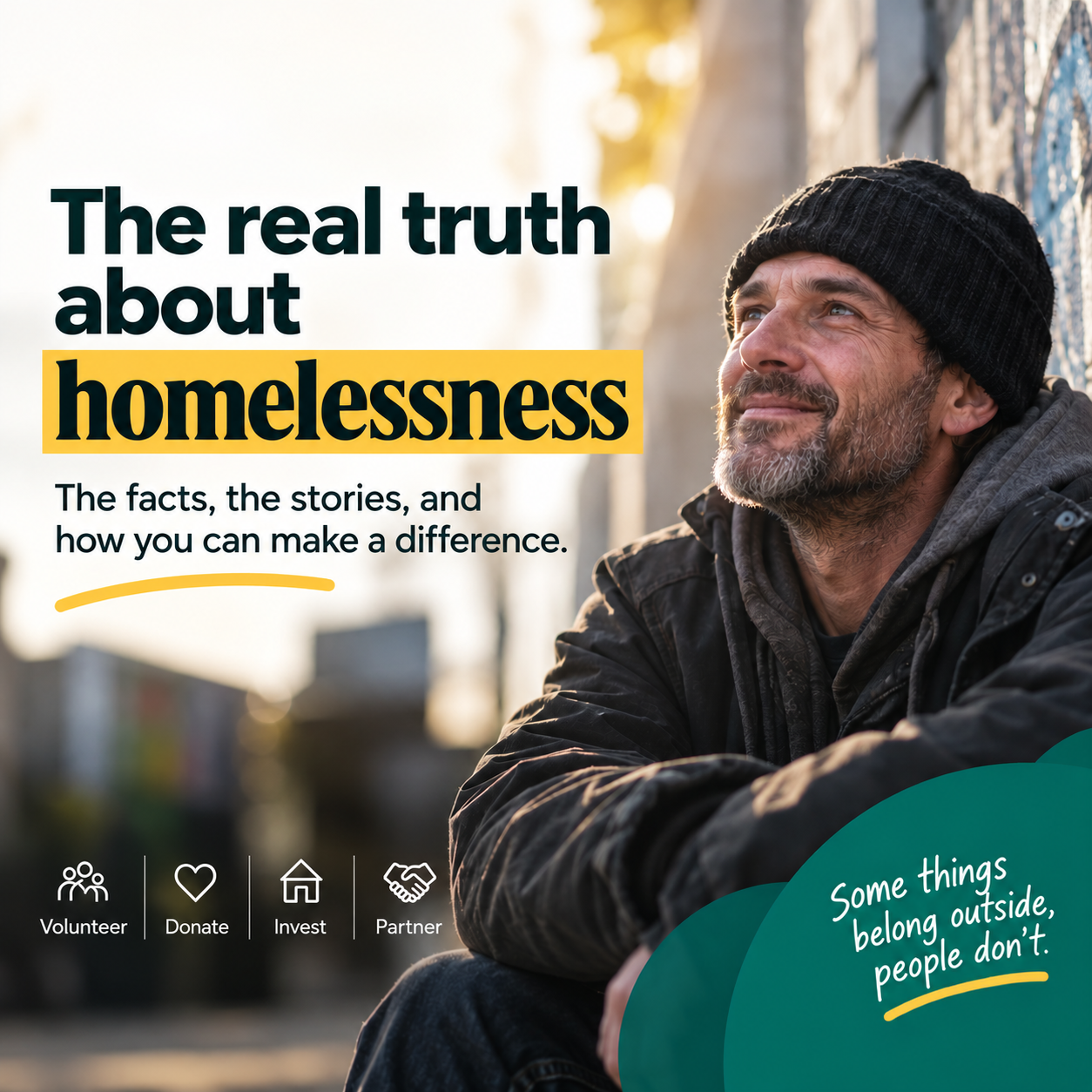
When you picture homelessness, what do you see?
Perhaps someone sleeping in a doorway. A sleeping bag tucked beneath a shopfront. Someone asking for change on a busy street. That is homelessness. But it isn't the whole picture.
Homelessness can also look like a child getting ready for school from temporary accommodation. A family living out of suitcases, not knowing when they'll have somewhere permanent to call home. Someone sleeping on a friend's sofa because they have nowhere else to go. A person leaving an unsafe relationship with no home to return to. Someone sleeping in their car. It can look like a parent trying to create a sense of normality for their children from one temporary room.
Homelessness isn't one type of person or one story. And right now, the scale of the need is difficult to ignore.
The numbers tell a story. But every number is a person.
In December 2025, Shelter estimated that at least 382,618 people were homeless in England — around 1 in every 153 people. Among them were 175,025 children. That number deserves a moment.
175,025 children without a permanent home.
Government figures give us another view of the scale of the crisis. On 31 December 2025, 134,210 households were living in temporary accommodation in England, including 176,130 dependent children. For families with children, the most common length of time already spent in temporary accommodation was between two and five years.
Rough sleeping has also continued to rise. The government's autumn 2025 snapshot estimated 4,793 people sleeping rough on a single night in England — the highest figure recorded since the current snapshot approach began in 2010 and the fourth consecutive annual increase.
Across the rest of the UK, homelessness is recorded differently, so the figures aren't directly comparable. But the pressure is clear. Scotland recorded 18,092 households and 10,480 children in temporary accommodation at the end of September 2025, while in Wales 10,818 people were living in temporary accommodation at the end of October 2025.
But behind all those numbers are lives. Mornings. Bedtimes. Birthdays. School runs. Job interviews. Christmases. People waiting for the safety and stability of somewhere to call home.
So, how does someone become homeless?
There isn't one answer. In England, 330,410 households were assessed as being homeless or threatened with homelessness during 2024–25. Among households owed a prevention duty, the end of a private rented tenancy was the most common reason for the loss of their last settled home.
Behind the statistics are all kinds of circumstances: relationship breakdown, eviction, poverty, domestic abuse, leaving an institution, unemployment, unaffordable housing costs or simply reaching the point where there is nowhere else to go. Sometimes it's a chain of events. Sometimes one crisis is enough. And that's why one of the most damaging misconceptions about homelessness is that there is a particular type of person it happens to.
There are people. There are stories. And there are circumstances.
Every person experiencing homelessness has a story that is bigger than their housing situation.
The need is huge. But here's the hopeful part.
Statistics like these can leave us wondering what one person could possibly do about a problem this big. The answer is: something. You don't have to solve homelessness on your own. You don't have to start a charity, own a spare house or have thousands of pounds to give. Real change is built when ordinary people decide to use what they already have — their time, money, skills, voice, influence, prayer or community — to make a difference.
- You can give your time. Volunteer with a homelessness organisation in your community. Serve meals, help sort donations, offer a professional skill or simply ask a local charity what would be genuinely useful.
- You can give financially. A regular donation, one-off gift or fundraiser can help organisations provide practical support to people experiencing homelessness. One person's contribution might feel small, but many people choosing to act can create something significant.
- You can use your voice. Share what you've learned. Talk about homelessness at work. Challenge misconceptions when you hear them. Start a conversation around the dinner table or share a statistic on social media. Awareness might seem like a small step, but how we see homelessness affects how we respond to it.
- You can get your church involved. Your church or small group could dedicate time to learning and praying about homelessness, invite a local organisation to speak, volunteer together or explore what resources, people or property you already have that could make a difference.
- You can use your savings for good. Through Green Pastures, people can choose to invest from £1,000, helping us work alongside churches and charities to provide homes and ongoing support for people experiencing homelessness, while investors can receive an agreed financial return. Or perhaps your church or organisation could go further and become a Green Pastures Partner, working with us to provide homes and support for people in your own community.
There are so many ways to take part because we all have something different to offer. Time. Money. Skills. Influence. Prayer. Property. Community. The question isn't whether you can do everything.
It's what you can do.
No one on the outside.
Imagine what could happen if this October, thousands of ordinary people decided to do just one thing. Perhaps it's sharing one statistic or starting one conversation. Perhaps it's a church dedicating a Sunday to homelessness, a family deciding to volunteer together, someone making their first donation or an investor deciding their savings could do more.
None of those actions alone will end homelessness. But together, they become something much bigger. They tell someone who has found themselves without a home that they matter. That they belong. That they haven't been forgotten.
At Green Pastures, we're working towards a future where everyone has a safe and secure place to call home. And there is a place for you in that story.
Start with one simple action this October
For Homelessness Awareness Month 2026, we've created a completely FREE resource pack to make getting involved simple.
Whether you're using it in your church, home, small group, workplace, school or community, you'll find resources to help you understand homelessness, challenge misconceptions, start meaningful conversations and turn awareness into action.
Inside you'll find prayers and reflections, homelessness statistics, stories of hope, practical action ideas, videos, presentation slides, social media graphics and more. You don't need to use everything. Choose what works for you and start there.